


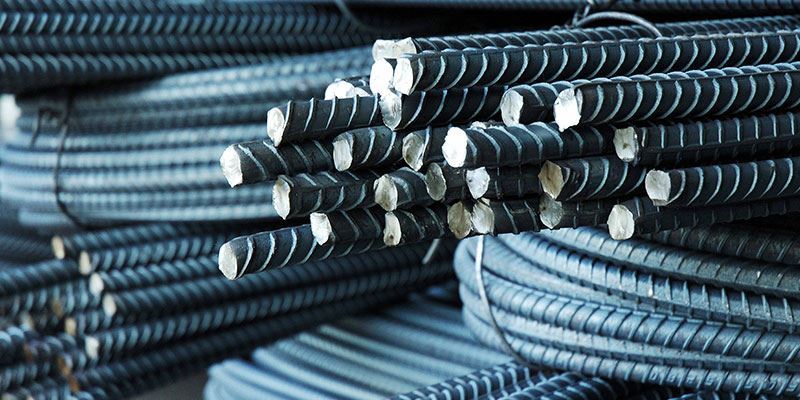
In Germany, rebar prices were stable at EUR 635 at the beginning of October. Construction activity in the country remains relatively stable, which has kept prices from experiencing large fluctuations. Behind this stability, however, local producers are facing increasing cost pressures. High energy prices and labor costs are causing German producers to struggle to compete globally. Cheap imports, especially from Asia, continue to weigh on local demand in Germany.
Rebar prices in Poland suffered a notable decrease at the beginning of October, decreasing to 603 EUR at the beginning of October. Starting the new week with a decrease of EUR 7, the Polish market faced weakening demand and import pressure. Particularly in the cut-to-bar market, demand has been decreasing due to the change in the format of construction projects. As construction sites are shifting more towards cut-to-length rebar instead of flat bar, demand pressure is pushing prices lower. In Poland, the wire rod market started the new week with a decrease of EUR 30, bringing prices decreased to EUR 600.
Local distributors note that demand is not completely exhausted, but the pressure for lower prices remains quite high. This is preventing prices from moving upwards despite the acceleration of projects, especially in Poland.
Rebar markets in southern Europe have faced steeper decreases.
In Spain, prices decreased by EUR 35 to EUR 565 at the beginning of October. This decrease is attributed to a general weakening in demand and the greater availability of imported rebar in the local market. Competitive prices, especially from China, Indonesia and North Africa, are increasing the pressure on Spanish producers.
Behind this weakness in Spain is a sluggish construction sector and general economic uncertainty. The slowdown in projects in the country and local producers' struggles with rising costs have led to lower prices in the market.
Rebar prices in Italy started the new week with a decrease of EUR 10 to EUR 570. Weak demand in the country and cheap imports suppressing the market led to a downtrend in prices. Wire rod prices in Italy, on the other hand, remained stable at EUR 620. Italy has been facing a flood of rebar imports, especially from North Africa and Asia. This has left local producers unable to compete on cost and struggling in the domestic market.
An Italian producer noted that Europe is not cost competitive with exporting countries in Asia and North Africa due to high production costs. This continues to put pressure on Italian producers, especially due to cheap imports from China and Indonesia.
These decreases in the rebar and wire rod market across Europe are due to weak demand and high raw material costs. Competitive billet prices from Asia are causing European mills to struggle to cut costs, while demand pressure is increasing at the same time. Traders say mills are trying to increase prices but to no avail as the market is fairly quiet and demand remains low.
European producers faced a market where they had to fight for every order in the face of weak demand.The impact of low-priced products from Asia on the European market has also led to a decrease in scrap prices, which is expected to continue, especially until the end of the year.
Country-specific price movements in the European rebar market are shaped by the economic recession and import pressures in the region. Local producers, struggling with high costs, are under the influence of lack of demand and cheap imports, and the downward trend in the markets is expected to continue. Cheap products, especially from Asia and North Africa, continue to pose a serious threat to local producers in Europe.




Comments
No comment yet.