


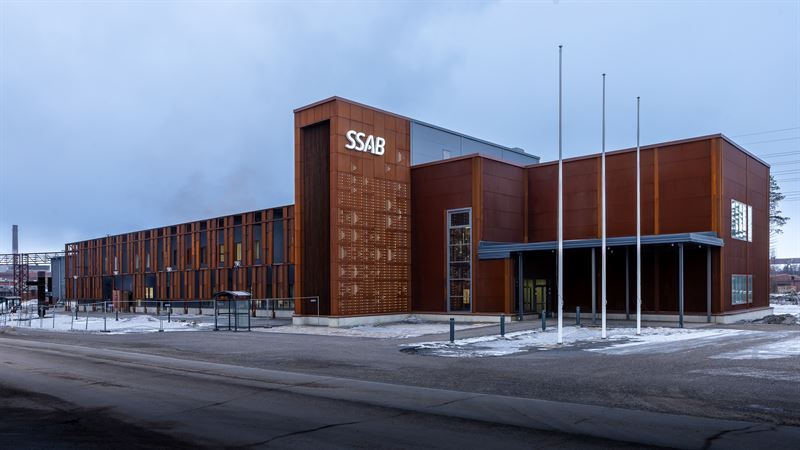
The company’s financial results point to a relatively resilient performance under challenging market conditions. SSAB reported total revenue of SEK 96.2 billion for 2025, while operating profit (EBIT) reached SEK 6.1 billion. Earnings per share stood at SEK 4.92, and the board proposed a dividend of SEK 2.00 per share. Strong operating cash flow of SEK 7.6 billion underscored the company’s solid balance sheet, with officials emphasizing that its premium product strategy and geographic diversification helped offset the impact of lower market prices.
In terms of market positioning, SSAB maintained its leadership in the advanced high-strength steel (AHSS) segment, holding an estimated 20% global market share. The company continues to benefit from strong customer loyalty driven by brands such as Hardox and Strenx, enabling higher value-added offerings. Premium products accounted for 55% of total shipments, remaining a key driver of margins.
As part of its “Accelerating Premium Leadership” strategy, SSAB updated its targets, aiming to increase the share of premium products to 65% by 2030 and 75% by 2035. The company also made progress in operational excellence, achieving its lowest-ever lost time injury frequency rate of 0.56 in 2025, reflecting continued improvements in safety and efficiency across its operations.
Investments in fossil-free steel production remain central to SSAB’s transformation strategy. At its Oxelösund site in Sweden, construction of a new electric arc furnace (EAF) to replace blast furnaces is progressing as planned, with operations expected to begin in early 2027. Meanwhile, the Luleå mini-mill project stands out for its environmental impact, with the potential to reduce Sweden’s total carbon emissions by approximately 7% upon completion.
Strategic partnerships across the value chain also featured prominently in the report. Volvo Cars is set to become the first automaker to use “SSAB Zero™” in serial production, alongside initiatives to recycle high-quality scrap from its operations. Toyota Material Handling Europe secured supply agreements to support its low-carbon manufacturing goals, while collaborations with Alfa Laval and Outokumpu aim to reduce the carbon footprint of heat exchanger steel by up to 60%.
Overall, the report indicates that SSAB, leveraging its expertise since 1878, is not only maintaining financial resilience but also strengthening its position as a key player in the global transition toward low-carbon steel production.





Comments
No comment yet.